Swapping a light for a fan
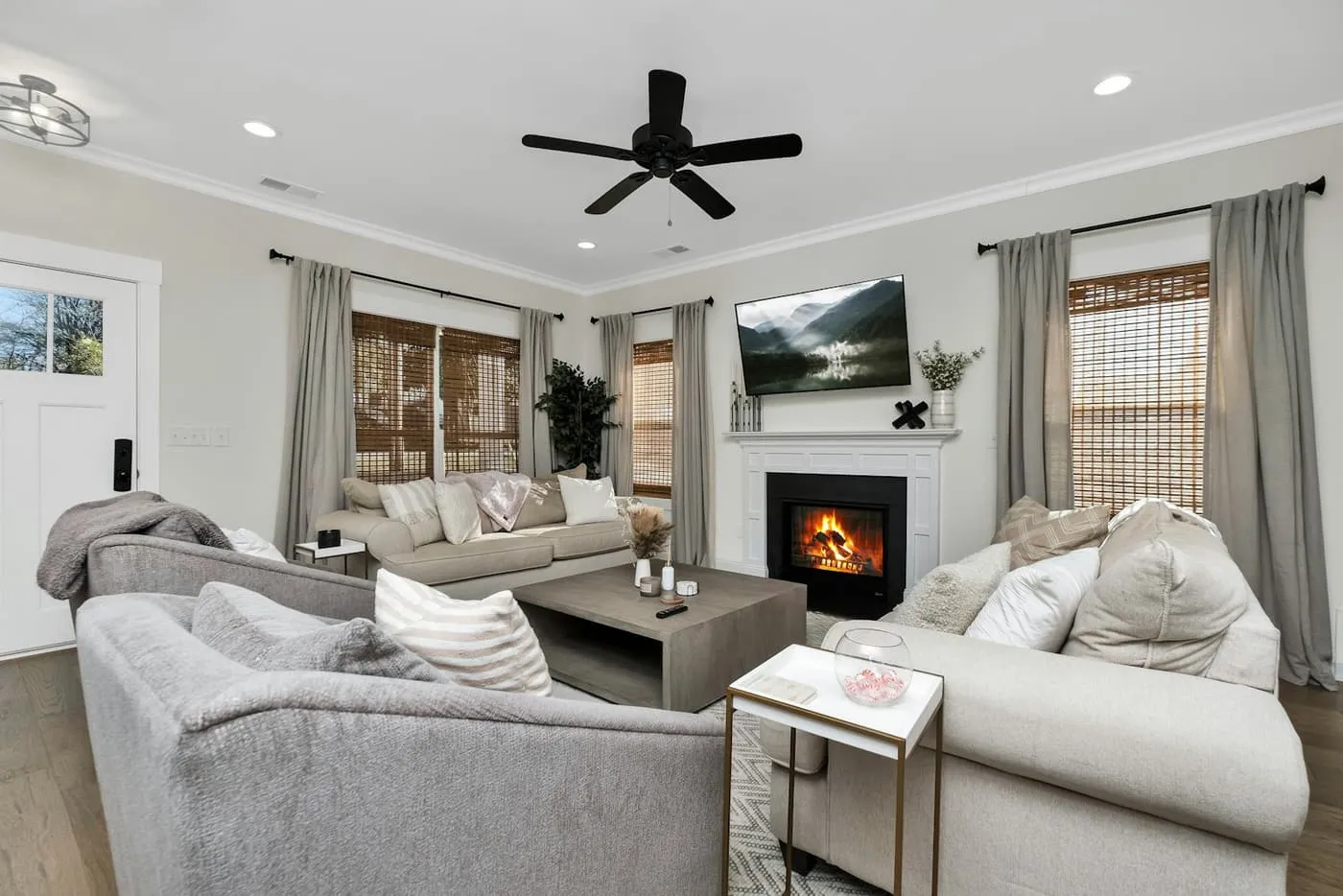
A ceiling fan makes a bedroom easier to sleep in through a Virginia summer and moves warm air down from high ceilings in winter. Most fan installs we do replace an existing ceiling light, or replace an old fan that has started to wobble, click, or run on one speed only.
The difference between hanging a light and hanging a fan is the box in the ceiling. A light fixture just hangs; a fan is heavier and moves, so it must be mounted on a box rated for ceiling fans and fixed to the framing.
Light fixtures, switches, and outlets
Replacing dated or broken lighting is one of the quickest ways to change how a room feels. We take down the old fixture and install the new one on the existing box and wiring: ceiling lights, pendants over an island, vanity bars in the bathroom, porch and exterior wall lights. We check that the box is sound and suited to the new fixture before anything goes up.
We also swap switches, dimmers, and outlets on existing wiring. Worn switches, outlets that no longer hold a plug, a dimmer for the dining room: we swap these with the power off at the breaker and test before and after.
High ceilings and two-story rooms
Many homes around Ashburn, South Riding, and Stone Ridge have two-story family rooms and vaulted ceilings, where the fan needs a longer downrod to hang at a useful height and a sloped-ceiling adapter to hang straight. We bring the ladders and the right parts for the height, and we size the downrod so the blades sit well clear of anyone standing below and at a height where the fan actually moves air through the room.
Balanced, quiet, and working
A fan that wobbles is usually a fan that was not balanced after it was hung, or one whose blade screws have loosened over time. We balance every fan we install and check it on every speed. Where there is an existing wall switch, we can swap it for a fan and light control that works on the same wiring, or set up the remote that came with the fan.
Where our work stops
We install fans where a light or fan already has power. We do not add fans to rooms where there is no ceiling box and no wiring, and we do not run new circuits or add new switches in new places. That work needs a licensed electrician. If it is what your room needs, we’ll explain that at the estimate and refer you to a vetted electrician we recommend.
Taking down an old fixture often leaves an unpainted patch or old screw holes on the ceiling. We can patch and paint those so the new fan sits on a clean surface. If you have mirrors, shelves, or other hardware to hang, see hanging and hardware installation. If there’s more on your list than lighting, send it our way. Through our honey-do list service, we’ll review the jobs with you and put a plan together.
What to have ready on the day
We can source and purchase the fan or light fixture for your project, or install one you’ve already purchased. If you’re supplying it, have it on hand in its packaging with all included parts, including the downrod if the fan came with one. Measure your ceiling height if it is higher than usual, so we know whether a longer downrod is needed before we arrive. Clear the bed or furniture under the fixture, or leave heavy pieces to us. The power to the room is turned off at the breaker while we work. When we leave, the fan will be balanced, tested on every speed, and working with its light kit and controls.
For electrical fixture work, we turn off the power at the breaker and test that the circuit is off before touching any wires. Knowing where your breaker panel is and whether its labels are accurate helps us get started. Each electrical fixture is tested after installation.